
Motorcycle Staggered Formation: Spacing, Positions & When to Ride Single File
A practical guide to riding staggered in a group: where each rider sits in the lane, how much gap to keep, when to switch to single file, and how it works on Indian roads.
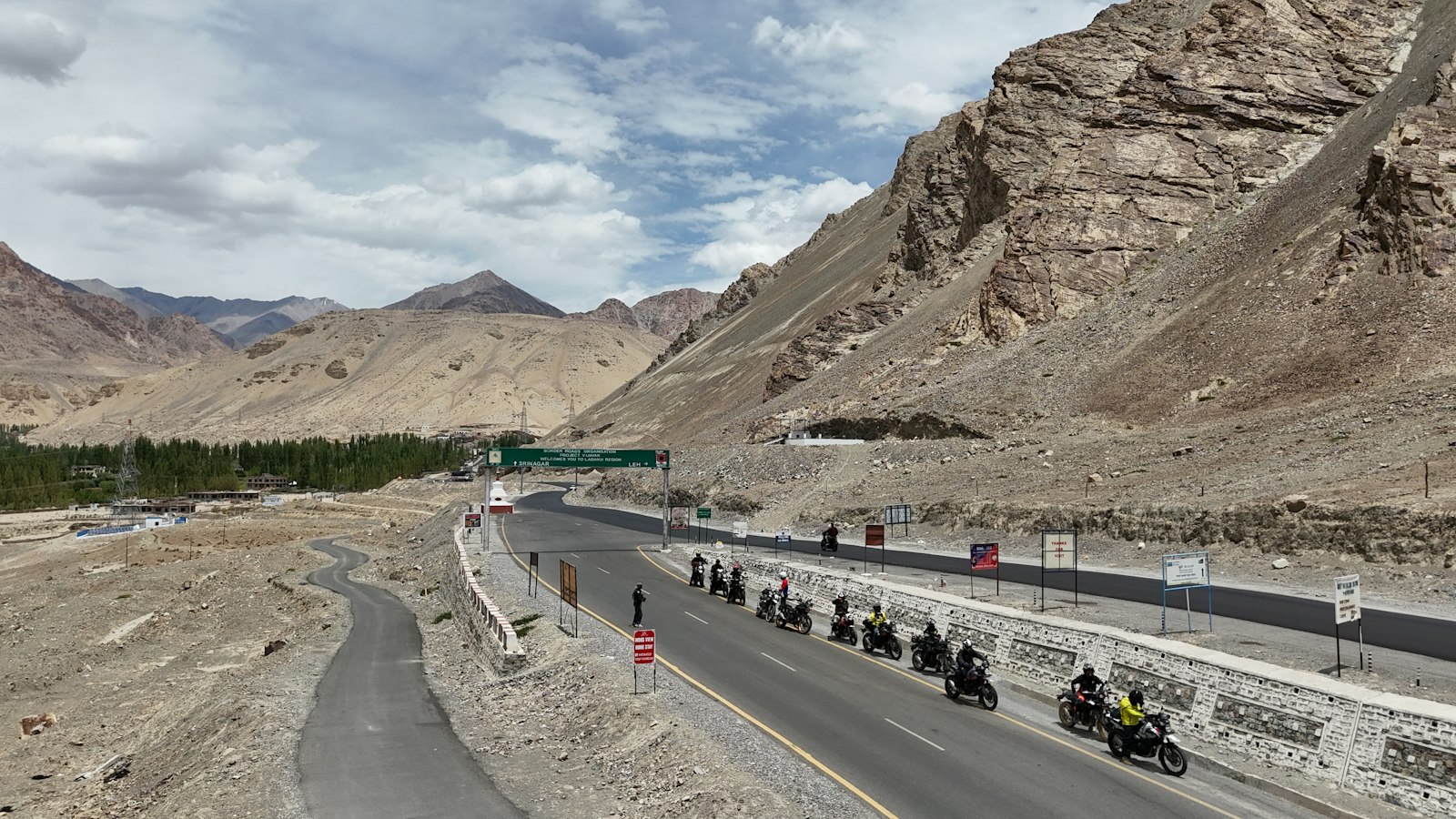
Quick answer: What is a motorcycle staggered formation? A motorcycle staggered formation is a group riding pattern where riders alternate between the two sides of one lane, so each rider has a clear view ahead and room to move. Common guidance is about 1 second of gap to the rider diagonally ahead and about 2 seconds to the rider directly ahead in the same track. Groups switch to single file on curves, ghat roads, narrow or broken roads and in poor visibility.
The motorcycle staggered formation is the default shape for most group rides on open roads. It looks simple: two lines of bikes, offset from each other. In practice, the details decide whether it keeps the group safe or just makes it look tidy.
This guide covers lane positions, spacing, when to drop to single file, lead and sweep roles, signals, and riding staggered in Indian traffic.
A note before you start: formations and spacing vary by club, by country and by local law. Treat this as common guidance, and follow your club's rules and your local traffic law where they differ.
What is a staggered formation on a motorcycle?
A staggered formation is a way of riding in a group where each rider takes the opposite side of the lane to the rider in front.
One rider rides in one wheel track of the lane. The next rider takes the other wheel track, a little further back. The third rider returns to the first side, and so on down the group. Picture a zig-zag of bikes inside a single lane.
The reason is space. Riding directly behind another bike limits what you can see, and riding side by side removes your escape route. The stagger gives every rider a line of sight past the bike ahead and room around them, while keeping the group compact.
Lane positions in a staggered formation
Each rider holds one of two tracks in the lane, and keeps the same track for the whole staggered section.
Think of the lane in three parts: left, centre and right. In staggered formation, riders use the left and right parts and leave the centre mostly free.
- Lead rider: takes the track agreed at the briefing, usually the one that gives the best view ahead.
- Second rider: takes the opposite track, behind the leader.
- Third rider: back on the leader's side, behind the leader.
- Every rider after that: keeps alternating.
Riders don't swap tracks mid-section. If a rider leaves the group, the riders behind restore the pattern slowly, and only when the road is clear.
How far apart should motorcycles be in staggered formation?
Common guidance is about 1 second to the rider diagonally ahead and about 2 seconds to the rider directly ahead in the same track.
To measure a time gap, pick a fixed point like a sign. When the rider ahead passes it, count "one thousand one, one thousand two." If you reach the point first, you're too close. Time gaps grow automatically with speed, which is why they work better than metres.
| Position | Track in lane | Gap to rider diagonally ahead | Gap to rider directly ahead (same track) |
|---|---|---|---|
| Lead rider | Agreed at the briefing | n/a | n/a |
| Rider 2 | Opposite track to the lead | About 1 second | n/a |
| Rider 3 | Same track as the lead | About 1 second | About 2 seconds |
| Rider 4 and on | Keep alternating | About 1 second | About 2 seconds |
| Sweep rider | Whichever track continues the pattern | About 1 second | About 2 seconds |
Increase both gaps in rain, on loose surfaces, at night and with newer riders. These numbers are a starting point: agree the spacing at the pre-ride briefing so everyone works from the same rule.
When should a group switch to single file?
A group should switch to single file whenever a rider needs the whole width of the lane to stay safe.
Common reasons to go single file:
- Curves and hairpins. Each rider needs to choose their own line through a bend.
- Ghat sections and mountain roads. Tight turns, oncoming buses and sudden gradient changes leave no room for a stagger.
- Narrow roads and bridges. If two staggered bikes can't fit comfortably in the lane, it's single file.
- Poor surface. Potholes, gravel, diesel spills or broken patches mean riders must be able to move across the lane.
- Low visibility. Fog, heavy rain or dust make the extra space and simpler pattern safer.
- Toll plazas, traffic merges and roadworks.
When switching, close the gap to the rider in front only as far as the speed allows. Riders settle into one line in the order they were already in, and the rider on the left side drops back to make room. When the road opens up again, the lead signals staggered and the group spreads back out.
Lead and sweep roles in a riding formation
The lead rider sets the pace and the formation, and the sweep rider keeps the back of the group together.
Lead rider: knows the route, picks a pace the least experienced rider can hold, and calls formation changes early. A good lead signals single file before the narrow section starts, not inside it.
Sweep rider: rides last, and no one rides behind them. The sweep is usually experienced, stays with any rider who stops, and confirms that formation signals have reached the back of the group.
Newer riders: usually ride near the front, behind the lead, where the pace is steadiest. More on roles and regrouping in our guide to group riding rules.
How do you signal staggered and single file formation?
Formation changes are signalled with the left arm raised, and every rider relays the signal to the rider behind.
- Staggered formation: left arm raised straight up, two fingers extended in a V.
- Single file formation: left arm raised straight up, index finger pointing at the sky.
Hold the signal high enough for riders behind to see over your helmet, and keep it up until you see it repeated. Because one finger and two fingers are easy to confuse, go over both at the briefing. Our full motorcycle hand signals guide covers the rest of the signals a group needs.
Common motorcycle staggered formation mistakes
Most problems in a staggered formation come from spacing and timing, not from the pattern itself.
- Riding too close to the rider diagonally ahead. It removes the point of the stagger, and a swerve can bring two bikes together.
- Treating the stagger as side-by-side riding. Riders in a stagger are offset, never level.
- Staying staggered into a corner. Drop to single file before the bend.
- Signalling late. By the time the narrow section starts, it's too late to change formation smoothly.
- Not relaying signals. The back of the group stays staggered into a squeeze.
- Chasing the group. A rider who falls behind rejoins at the next regroup point, not by speeding.
Riding staggered on Indian roads
Indian roads need more flexibility, because a staggered formation has to share space with mixed traffic.
Left-hand traffic mirrors the diagrams. Most staggered formation diagrams online come from the US, where traffic keeps right. In India, traffic keeps left, so the pattern is mirrored. Agree which track the lead takes at the briefing rather than copying a US diagram.
Mixed traffic. Two-wheelers, autos, trucks, tractors and pedestrians share the same road. On highways with good lane discipline, staggered works well. In towns, at village crossings and in dense traffic, single file is often the safer choice.
Expect frequent changes. A day's ride moves between expressways, ghats, towns and single-lane roads, so practise the signals.
Keep the group visible. Formations stretch in traffic, and riders get separated at toll plazas and signals. A tool like WANDR keeps every rider on one live map and shows when riders reach each regroup stop, so the lead can wait at the right place instead of guessing. If your group is working out how to keep tabs on each other, our guide on how to track friends on a motorcycle ride compares the options.
Frequently Asked Questions
How far apart should motorcycles be in a staggered formation?
Common guidance is about 1 second of gap to the rider diagonally ahead and about 2 seconds to the rider directly ahead in the same track. Increase both gaps in rain, on loose surfaces, at night and with newer riders, and agree the exact spacing at the pre-ride briefing.
Is staggered formation safer than single file?
Staggered formation is usually safer on straight, open roads because each rider has a clear view ahead and room to react. Single file is safer on curves, ghat roads, narrow roads, poor surfaces and in low visibility, where every rider needs the whole lane width to choose a line or avoid a hazard.
Which side does the lead rider take in a staggered formation in India?
It depends on the club. Because India drives on the left, staggered formation diagrams from the US are mirrored. Many groups have the lead take the track that gives the clearest view ahead, but the safest approach is to agree the lead's track at the pre-ride briefing so every rider follows the same pattern.
What is the hand signal for staggered formation?
The staggered formation signal is the left arm raised straight up with two fingers extended in a V. Single file is the same raised arm with only the index finger up. Each rider holds the signal until riders behind repeat it, so the change reaches the sweep at the back of the group.
A staggered formation isn't about looking organized. It's about giving every rider space to see and space to react, and knowing when to give that up for single file.
About WANDR: WANDR is an Android app for motorcycle group rides. It combines riding groups, saved route plans with waypoints, turn-by-turn navigation, a live map of every rider and trip chat in one app, and shows when each rider reaches a stop. It's built for riding clubs, ride organizers and friends riding together. Get WANDR on Google Play.
Related Guides from the Wandr Journal
Your next ride starts with WANDR.
Download free for Android. Keep your crew, your route, and your journey connected on every mile.