
How to Plan a Multi-Bike Road Trip in India: Complete Route, Safety & Live Tracking Guide
A comprehensive checklist for organizing long-distance group motorcycle tours across Indian highways, Western Ghats, and Himalayan passes.
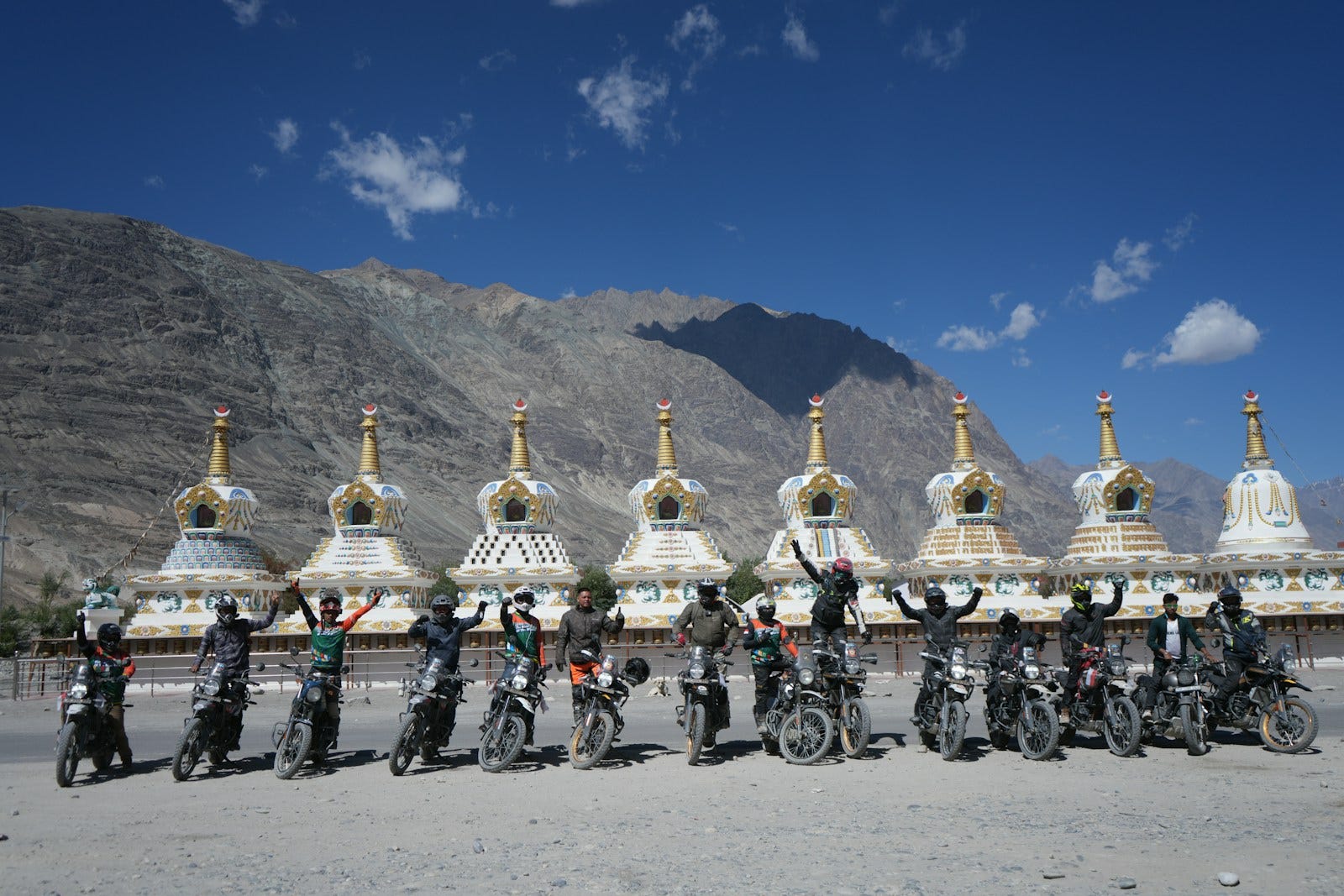
Quick summary: What is the most critical factor when planning a multi-bike tour in India? Indian roads are uniquely dynamic—featuring cattle crossings, sudden highway diversions, and patchy network corridors in mountain passes. Beyond mechanical prep and safety gear, a successful tour requires strict convoy hierarchy (Lead and Sweep), cached offline routes, and an active group ride tracker like Wandr that maintains pack visibility without draining phone batteries in intense heat.
Riding across India with your closest friends is one of the most exhilarating experiences on two wheels. From the misty coffee plantations of Coorg and the hairpin ghats of the Western Ghats to the high-altitude deserts of Ladakh and Spiti, the subcontinent offers world-class touring terrain.
However, organizing a group motorcycle expedition in India is vastly different from touring in North America or Western Europe.
Between unpredictable state highway surfaces, stray livestock, sudden monsoon cloudbursts, and cellular dead zones, an unorganized group ride can quickly turn into an exhausting ordeal. One rider takes a wrong fork at a chaotic three-way roundabout, another stops for a roadside chai without informing the pack, and suddenly your group spends an hour parked on a dangerous highway shoulder trying to reconnect.
Here is the definitive guide to planning, executing, and leading a multi-bike road trip across India safely and seamlessly.
1. Select the Right Tour Route & Time Your Season
Timing the weather in India is crucial. Touring during the wrong month can mean unrideable monsoon slush or dangerous 44°C highway heat exhaustion.
Iconic Indian Touring Circuits:
| Route | Best Months | Distance | Terrain Challenge | Fuel & Network Availability |
|---|---|---|---|---|
| Manali – Leh – Srinagar | June to September | 1,200+ km | Extreme (High altitude passes, water crossings) | Scarce (365 km stretch without petrol; Postpaid SIMs only) |
| Spiti Valley Circuit | Late June to October | 900+ km | High (Unpaved riverbeds, rocky terrain) | Limited (Highest retail fuel outlet at Kaza) |
| Western Ghats (Bengaluru – Coorg – Wayanad – Ooty) | September to February | 650–800 km | Medium (Steep hairpins, mist, wet tarmac) | Plentiful (Good fuel & 4G/5G coverage throughout) |
| Konkan Coastal Highway (Mumbai/Pune to Goa) | November to February | 550–600 km | Low-Medium (Scenic coastal bends, ferry crossings) | Excellent along NH66 / Coastal roads |
| North East Circuit (Guwahati – Shillong – Tawang) | October to April | 1,000+ km | High (Fog, elevation, border permits required) | Moderate (Requires inner line permits & cash) |
2. Master Fuel Math & Highway Stop Cadence
One of the most common friction points on group tours is mismatched motorcycle fuel tanks.
A Royal Enfield Himalayan 450 or BMW GS has a comfortable 350–400 km range, while a modified KTM 390 Duke or vintage two-stroke may need fuel every 200 km.
The Golden Fuel Rule:
The entire group refuels when the bike with the smallest tank hits reserve.
- Never let individual riders peel off to fill up at different petrol pumps along the highway.
- When the fuel light blinks on the smallest-range bike, the Lead pulls the entire pack into a reputable company-owned fuel pump (COCO pumps from IndianOil, BPCL, or HPCL are preferred for unadulterated fuel).
- While bikes refuel, riders hydrate, clean helmet visors, and check tire pressure.
3. Establish Clear Convoy Formation on Indian Roads
Riding in formation on Indian roads requires constant adaptation:
HIGHWAY (STAGGERED FORMATION)          GHATS & STATE ROADS (SINGLE FILE)
       [Lead Rider - Left]                         [Lead Rider]
             \                                           |
        [Rider 2 - Right]                          [Rider 2]
             /                                           |
       [Rider 3 - Left]                            [Rider 3]
             \                                           |
        [Rider 4 - Right]                          [Rider 4]
             /                                           |
       [Sweep Rider - Left]                        [Sweep Rider]
Staggered Formation on 4-Lane & 6-Lane Expressways
- The Lead Rider stays in the left-center of the lane.
- The Second Rider rides 2–3 seconds behind, positioned in the right-center of the lane.
- This creates an open "cushion" in front of every rider to dodge unexpected potholes, truck tire retreads, or sudden lane-splitting auto-rickshaws.
Single-File Formation on Mountain Ghats & Single-Carriage Highways
- On mountain climbs with blind hairpin bends (such as the 36 hairpins of Kalhatty near Ooty, or Rohtang Pass), immediately switch to single file.
- Give at least 4 to 5 seconds of stopping distance between bikes to accommodate heavy uphill transport trucks that may brake abruptly or roll backward.
The Roles of Lead and Sweep:
- The Lead Rider (Road Captain): Must know the route thoroughly, understand local traffic conditions, and signal road hazards (pointing with a boot or hand to highlight oil spills, dogs, or potholes).
- The Sweep (Tail Gunner): Stays at the very back of the pack. The sweep carries a comprehensive tool kit, tire inflator, first aid kit, and an emergency tire puncture kit. No rider ever drops behind the Sweep.
For a deeper dive into group formation rules, read our complete guide on Group Riding Rules: How to Never Lose a Rider.
4. Eliminate the "Where Are You?" Chaos with Live Tracking
Nothing derails a tour faster than spending 30 minutes at a chaotic highway flyover wondering if the trailing two riders took the elevated bypass or the surface service road.
Many groups attempt to use WhatsApp live location, only to discover that it burns phone batteries in two hours, lacks route context, and frequently expires. (See our side-by-side analysis in Wandr vs WhatsApp Live Location for Group Rides).
How Modern Touring Groups Track with Wandr:
- One Synchronized Itinerary: The trip leader creates the route with all designated waypoints (breakfast dhaba, fuel pumps, hotel destination) and shares a private 8-character code.
- Real-Time Fleet Radar: Every rider sees their friends plotted directly along the navigation route. If someone drops 5 kilometers back due to slow traffic, the Lead sees it instantly without pulling over.
- Automated Stop Announcements: When riders arrive at a designated lunch stop, Wandr automatically logs their arrival in the trip feed ("📍 Rohit arrived at Grand Dhaba").
- Passenger Mode: Riders carrying pillion passengers can put the pillion's phone into Passenger Mode to view group progress without draining GPS power on non-navigation devices.
- Battery Conservation: Wandr throttles GPS pings when stationary, preventing overheating under India's hot sun.
5. Mandatory Emergency Gear Checklist for Touring India
Before rolling out of your home city, verify that the group carries these essential tools:
Mechanical Essentials:
- Portable 12V / USB Rechargeable Electric Tire Inflator (e.g., Xiaomi or Qubo)
- Tubeless tire puncture repair kit with extra rubber strips and reamer
- Can of high-viscosity chain lube (lube every 400–500 km or after riding in heavy rain)
- Compact motorcycle tool roll (wrenches matching your bike's axle nuts, hex keys, pliers, zip ties, M-Seal, and metal safety wire)
- Spare clutch and throttle cables routed in parallel along the existing cables
Medical & Safety Supplies:
- First aid trauma kit (sterile gauze, crepe bandages, antiseptic solution, burn ointment, adhesive tape)
- ORS (Oral Rehydration Salts) or electrolyte tablets to prevent dehydration under heavy riding jackets
- High-altitude medication (Diamox) if ascending above 10,000 feet in Ladakh or Spiti, along with an oximeter
- Printed laminated emergency cards for every rider listing blood group, emergency contact numbers, and health insurance policy numbers
Emergency Protocol:
Agree before the ride who calls whom if someone has a spill or breakdown, and save local emergency numbers (112 in India) in every rider's phone. On the Wandr live map, the group can see a stopped rider's last position, so the sweep rider knows where to head back to.
Final Checklist Before You Kick-Start
- Complete motorcycle service (oil change, brake pad inspection, chain tension, and tire tread depth)
- Install a secure, vibration-dampened phone mount with direct bike USB charging
- Cache offline map regions on Google Maps for areas with sparse cellular connectivity
- Create your tour on Wandr and share the 8-character invite code with all riders
- Confirm valid bike documents (PUC, Insurance, Registration Certificate, and Driving License) stored digitally on DigiLocker / mParivahan
- Conduct a 5-minute pre-ride safety briefing covering hand signals, fuel stops, and regrouping points
Ride hard, stay visible, and arrive together.
Want to streamline your next group bike expedition? Discover how Wandr keeps riding packs synchronized on every highway across India.
Your next ride starts with WANDR.
Download free for Android. Keep your crew, your route, and your journey connected on every mile.